


How to Balance Linearity and Efficiency in a Power Amplifier
- shireen
- Apr 26, 2019
- 3 min read
Achieving a linear and efficiency balance in a power amplifier is not difficult as long as you know about the steps required to achieve and maintain it. But before discussing the required balancing steps in details, let us go over the basics.
What is a Power Amplifier?
A power amplifier is the main component in the Radio Frequency transmitters. It can be found in the front-end area of the transmitters and is used to convert the low-power signals from the radar and other communication equipment into high-power transmission for antennas.
As the name suggests, it is a signal amplifier that increases the quality of the low signal to the point where it achieves high-level power status. All of this is done in a bid to preserve the quality of the signals. Power amplifiers are different from high power military BDA (Bi-Directional Amplifiers) because the latter fulfills the roles of both the receiver and transmitter.
Power amplifiers would only be efficient if they are combined with devices having a non-linear range. Otherwise, it would create disruption in the radio frequency signal which would affect the overall transmission of signals.
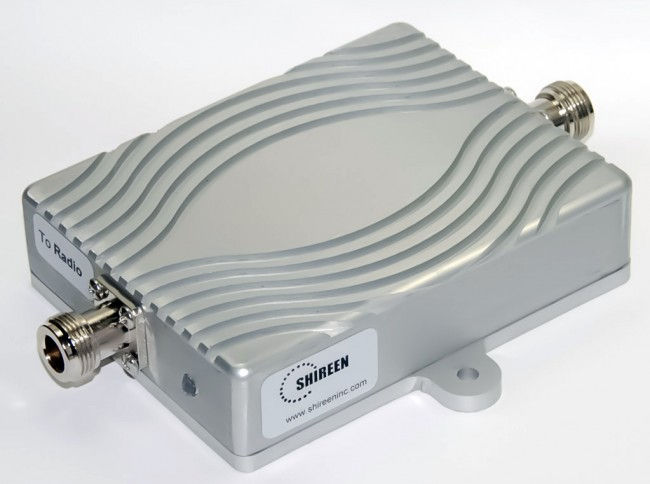
Balancing Efficiency and Linearity in Power Amplifiers
A power amplifier working in a non-linear region would contribute towards disruption in the process of receiving, amplifying and delivering signals. To avoid unpleasant circumstances from happening, you need to balance the efficiency and the linearity factor in the PAs. You can achieve this through the following steps:
· The most basic approach to maintaining linearity is by applying ‘back-off.’ It simply means that you will be reducing the signal’s input. This will compel the power amplifier to reduce its output process far below the acceptable decompression point, i.e. 1dB. The only problem with this strategy is that it will affect the operations of the PA and will make it less efficient in transferring DC power to Radio Frequency energy.
· The next strategy revolves around the insertion of a predistortion linearizer. The rest of the operations will remain the same, i.e. the application of the ‘back-off’ approach. By inserting a predistortion linearizer, you can achieve higher linear performance along with a higher rate of efficiency. That said, the predistortion insertion can work with both the digital as well as analog domains.
· The final approach of achieving a balance between the efficiency and linearity in a PA is by implementing a digital distortion system. Although this technique is fairly new, it has been shown to increase performance while balancing efficiency and linearity in a power amplifier.
Conclusion
Linearity and efficiency of a power amplifier are similar to two ends of the same stick. For one end to go up, the other must come down, i.e. to increase linearity, your efficiency may suffer and the amplification of efficiency cannot be done without hurting linearity. Because of this, finding a balance between both factors becomes a priority since PA’s performance depends on the right balance.
That said, a power amplifier with the highest efficiency may not strive towards achieving a balance in linearity since both the parameters do not share the same optimizing conditions. However, the strategies that we mentioned above may help you in achieving a perfect balance between the two factors. Now, it is all about experimenting with the parameters of your power amplifiers to find out whether the strategies work for you or not.


Comments